Following the Money: What SBA's Defense-Critical 8(a) Initiative Means for Federal Contractors
Published: September 17, 2026
Federal Market Analysis8(a) ProgramBusiness DevelopmentContracting TrendsDefense & AerospaceSmall Business
Fast-Track 8(a) approvals may expand opportunities beyond the prioritized NAICS codes selected for expedited 8(a) application approvals.
The Small Business Administration’s (SBA) prioritization of 8(a) applications for firms certified under 10 defense-critical NAICS codes will strengthen the defense industrial-base supply chains, providing broader contracting opportunities for all federal contractors.
However, government spending is tracked through PSCs, while SBA prioritization is based on NAICS codes, so future opportunities will not be limited to the new entrants. Businesses certified outside the prioritized NAICS may still compete if they provide products or services purchased under the associated Product Service Codes (PSCs).
Aligned with Executive Orders 14265-Modernizing Defense Acquisitions and Spurring Innovation in the Defense Industrial Base and 14415 - Securing America’s Defense Supply Chains and Ensuring Domestic Acquisition of Critical Materials, SBA will fast-track 8(a) applications for small businesses certified under the following ten NAICS codes:
- 331110: Iron and Steel Mills and Ferroalloy Manufacturing
- 332710: Machine Shops
- 332992: Small Arms Ammunition Manufacturing
- 332993: Ammunition (except Small Arms) Manufacturing
- 332999: All Other Miscellaneous Fabricated Metal Product Manufacturing
- 334419: Other Electronic Component Manufacturing
- 334511: Search, Detection, Navigation, Guidance, Aeronautical, and Nautical System and Instrument Manufacturing
- 336413: Other Aircraft Parts and Auxiliary Equipment Manufacturing
- 336414: Guided Missile and Space Vehicle Manufacturing
- 336611: Ship Building and Repairing.
The September 10, 2026 guidance also reinstates merit-based review under 13 CFR § 124.107, “What is Potential for Success,” that allows the SBA to forego the review of an 8(a) applicant’s income tax returns for the previous two years as long as the firm can show proven management and technical experience, operational capital, documented successful government contract performance, and demonstrated ability to fulfill all requirements needed to perform contracts.
Prioritizing 8(a) applications under these NAICS codes is designed to increase the contractor pool supporting replenishment of the nation’s dwindling weapons stockpiles and address long production times. NAICS codes represent the industry sectors, while the PSCs reflect the actual products and services the government purchases. Because the government purchases goods and services under more than 900 PSCs within those 10 NAICS codes, opportunities will exist for 8(a) firms with offerings under those PSCs. A review of defense spending over the past five fiscal years clarifies this.
Defense Spending Under Prioritized NAICS Codes
From FY 2021 to FY 2025, defense agencies awarded $442B in contracts under the 10 fast-track NAICS codes, but actual purchases were tracked under 931 PSCs, many of which are mapped to industries outside the selected NAICS codes. In other words, the money flows through PSCs, not NAICS codes, meaning existing firms that provide the products and services under those PSCs could compete for future contracts as long as the procurements are not specifically set aside for 8(a) companies. The chart below reflects the top 20 defense PSCs under the ten NAICS codes.
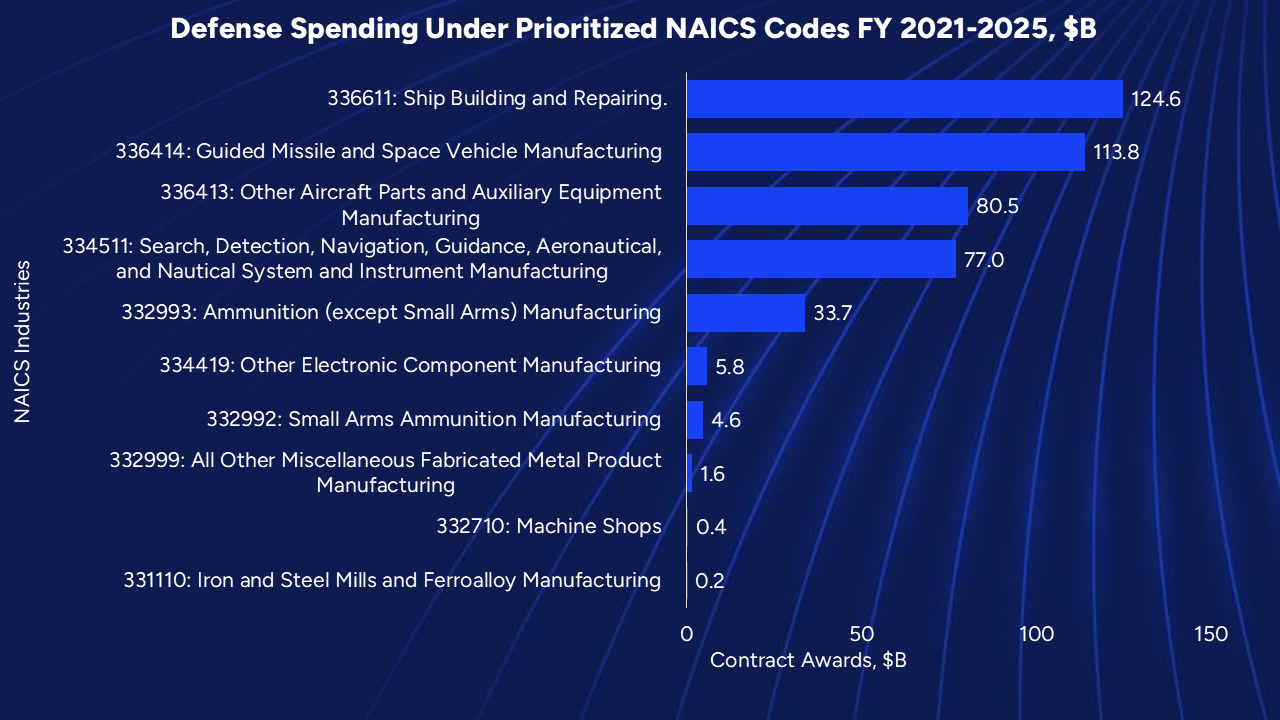
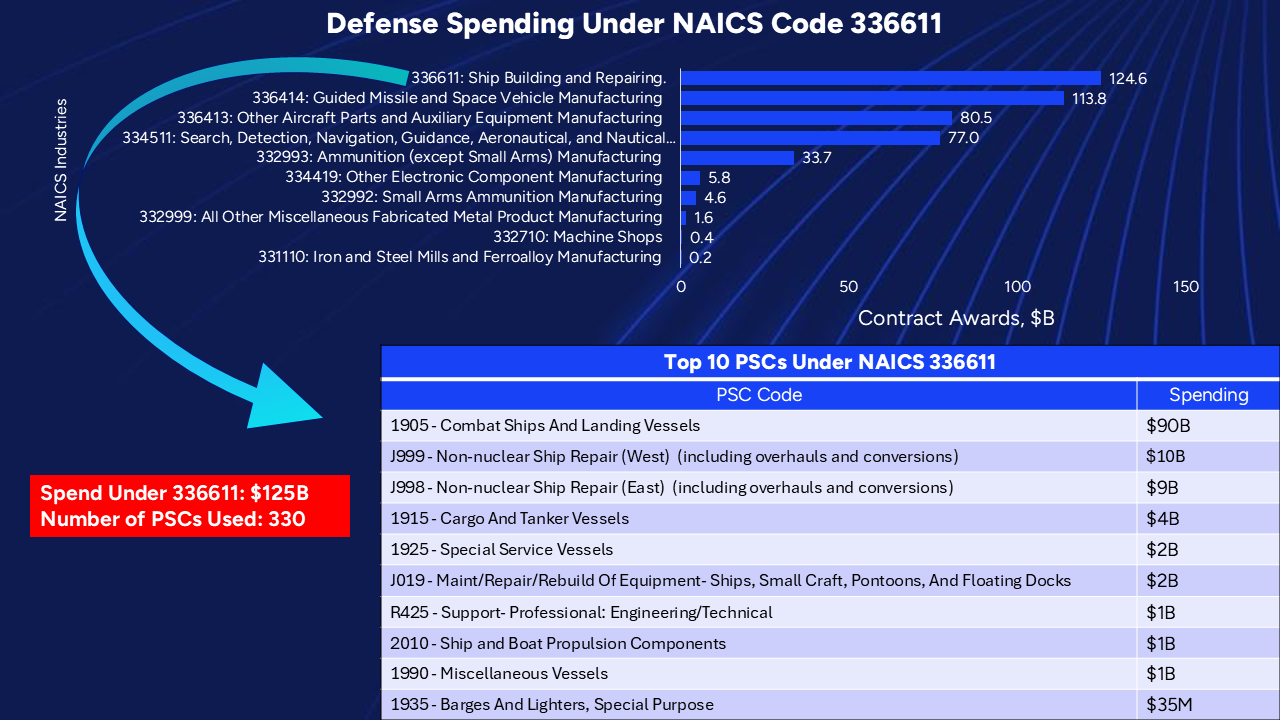
Ship Building and Repairing spending under NAICS 336611 ($124.6B) dominated spending, at 28% of total awards under the 10 prioritized NAICS with actual purchases also made under those 931 PSCs. The top 20 PSCs shown below supported manufacturing capabilities for maritime, aerospace, missiles, electronics, and precision instrument programs.

This included $97.4B for vessels, $21B for repairs, $1B for parts/components, and $1B for engineering and technical services. However, the obligations reported under those NAICS codes do not reflect the services the government purchased through 95,560 contracts awarded under PSCs not considered core products under the 10 selected NAICS. These purchases ranged from research and development, information technology support, office supplies, and cleaning products, reflecting a wide range of defense contracting opportunities beyond manufacturing.
For example, over the five-year period, only one of the 10 fast-track NAICS codes, 336413, ranked among the top 20 for all defense spending. Agencies awarded 488,069 contracts under NAICS 336413 valued at $80.5B, but the actual purchases were under 521 different PSCs. Of these obligations, 8(a) firms received only $266.5M.
8(a) Performance
Comparing all 8(a) awards to total defense spending within these NAICS codes shows that about 1% ($770M) was awarded to those companies, reflecting a significant underrepresentation. This was likely the rationale for fast-tracking 8(a) applications instead of providing alternative incentives for all contractors in those 10 industries.
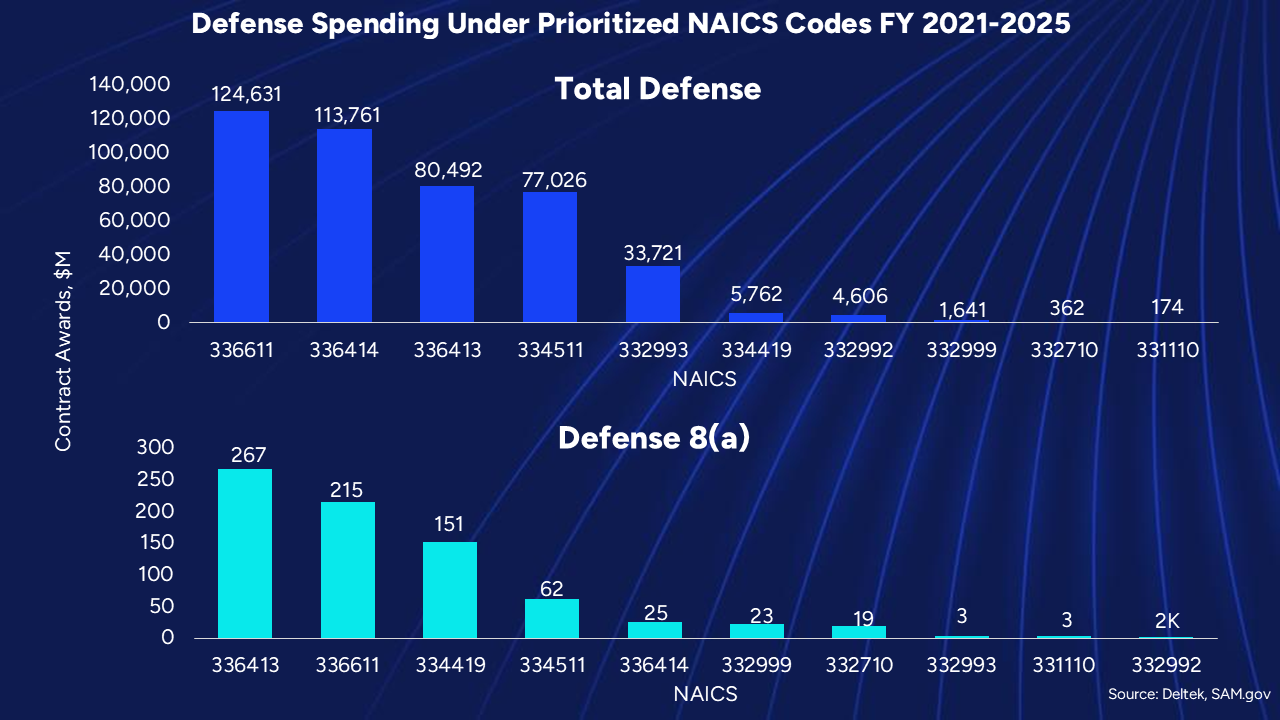
8(a) firms certified under 336413 Other Aircraft Parts and Auxiliary Equipment Manufacturing received 35% of contracts under these NAICS codes. Ship Building and Repairing contracts under NAICS 336611 accounted for 28% of obligations.
Conclusions
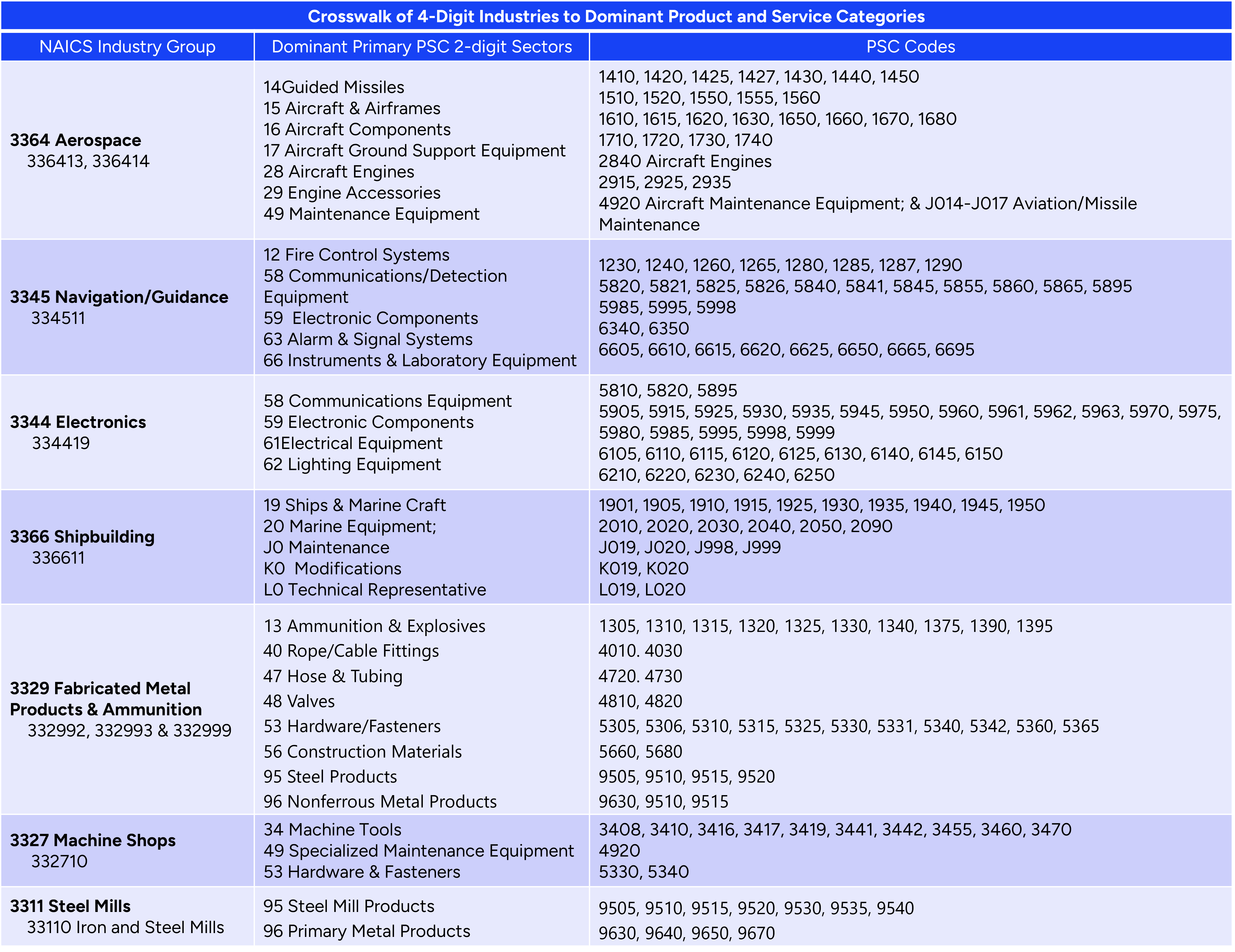
The SBA’s fast-tracking of 8(a) applications under the 10 NAICS codes will strengthen the defense industrial-base supply chains and address the underrepresentation of manufacturers in the 8(a) program. However, the guidance focuses more on the industrial sectors instead of where the money will be spent. (The attached file includes a crosswalk of the prioritized NAICS codes to PSCs for all spending from FY 2021 - FY 2025.)
Based on the guidance, defense spending under the prioritized NAICS rolls up into five major industry groups. These support core defense production sectors including aircraft, missiles, munitions, naval vessels, electronics, and metalworking through:
- Aerospace Product & Parts Manufacturing (3364)
- Electronic Components Manufacturing (3344)
- Navigation/Guidance and Instrument Manufacturing (3345)
- Ship Building (3366)
- Fabricated Metal Products (3329)
A detailed analysis of actual purchases over the five years revealed more than 40 other PSC sectors not mapped to the PSCs associated with the prioritized NAICS. These represent support, sustainment, R&D, training, IT, facilities, and program management activities layered on top of the manufacturing industrial base represented by the 10 target NAICS. This included items such as weapons, nuclear ordnance, training, information technology, furniture and office products, packaging and apparel, food, nonmetallic materials, and services.
Firms pursuing opportunities within the industries represented by the NAICS codes need to look closer to follow the money. The SBA guidance is designed to add manufacturing-related contractors providing products under about 16 core PSC codes. However, historical defense spending under the 10 NAICS shows a significant share of defense industrial base spending outside that core group, signaling opportunities for non-manufacturing firms. Being classified under one of these codes does not limit a firm to providing only those core products.
Although those NAICS codes identify the priority industrial sectors, the actual spending is distributed across a much broader set of PSCs. Industrial production-related firms should closely monitor the core manufacturing PSCs in the table below. Other contractors should monitor both the core manufacturing PSCs and those providing support, sustainment, R&D, IT, and professional services that account for a significant share of defense obligations.